 Add to Chrome
 Add to Firefox
 Add to Edge
Experiments in Agentic AI for Science
May 25, 2026
This paper details two novel frameworks for developing autonomous, agentic AI in scientific workflows. Both systems leverage a hybrid Local Body, Remote Brain architecture via Google Colab, utilizing Python-based local orchestrators to invoke large language model (LLM) cloud backends. The first agent, DeepTS/DeepCollector, automates the large-scale curation, extraction, and deduplication of time-series datasets. The second, DeepScribe, is an autonomous presentation analyzer that converts visually dense, mathematically complex physics lectures into structured scientific reports. Through practical systems engineering-such as granular attribute extraction (Cellular RAG), remote data inspection, and distributed concurrency controls-we demonstrate how agentic AI can overcome the context and reasoning limitations of current state-of-the-art systems to rigorously support scientific workflows. Finally, we outline a generalization of DeepTS to support deep knowledge graphs and discuss the application of this conceptual approach to high-energy physics (DeepQCD).

Diagnosing Training Inference Mismatch in LLM Reinforcement Learning
May 14, 2026Modern LLM RL systems separate rollout generation from policy optimization. These two stages are expected to produce token probabilities that match exactly. However, implementation differences can make them assign different values to the same sequence under the same model weights, inducing Training-Inference Mismatch (TIM). TIM is difficult to inspect because it is entangled with off-policy drift and common stabilization mechanisms. In this work, we isolate TIM in a zero-mismatch diagnostic setting (VeXact), and show that small token-level numerical disagreements can independently cause training collapse. We further show that TIM changes the effective optimization problem, and identify a set of remedies that could mitigate TIM. Our results suggest that TIM is not benign numerical noise, but a systems-level perturbation that should be treated as a first-order factor in analyzing LLM RL stability.
IDOBE: Infectious Disease Outbreak forecasting Benchmark Ecosystem
Apr 20, 2026Epidemic forecasting has become an integral part of real-time infectious disease outbreak response. While collaborative ensembles composed of statistical and machine learning models have become the norm for real-time forecasting, standardized benchmark datasets for evaluating such methods are lacking. Further, there is limited understanding on performance of these methods for novel outbreaks with limited historical data. In this paper, we propose IDOBE, a curated collection of epidemiological time series focused on outbreak forecasting. IDOBE compiles from multiple data repositories spanning over a century of surveillance and across U.S. states and global locations. We perform derivative-based segmentation to generate over 10,000 outbreaks covering multiple outcomes such as cases and hospitalizations for 13 diseases. We consider a variety of information-theoretic and distributional measures to quantify the epidemiological diversity of the dataset. Finally, we perform multi-horizon short-term forecasting (1- to 4-week-ahead) through the progression of the outbreak using 11 baseline models and report on their performance. In addition to standard metrics such as NMSE and MAPE for point forecasts, we include probabilistic scoring rules such as Normalized Weighted Interval Score (NWIS) to quantify the performance. We find that MLP-based methods have the most robust performance, with statistical methods having a slight edge during the pre-peak phase. IDOBE dataset along with baselines are released publicly on https://github.com/NSSAC/IDOBE to enable standardized, reproducible benchmarking of outbreak forecasting methods.
JetPrism: diagnosing convergence for generative simulation and inverse problems in nuclear physics
Apr 01, 2026High-fidelity Monte Carlo simulations and complex inverse problems, such as mapping smeared experimental observations to ground-truth states, are computationally intensive yet essential for robust data analysis. Conditional Flow Matching (CFM) offers a mathematically robust approach to accelerating these tasks, but we demonstrate its standard training loss is fundamentally misleading. In rigorous physics applications, CFM loss plateaus prematurely, serving as an unreliable indicator of true convergence and physical fidelity. To investigate this disconnect, we designed JetPrism, a configurable CFM framework acting as an efficient generative surrogate for evaluating unconditional generation and conditional detector unfolding. Using synthetic stress tests and a Jefferson Lab kinematic dataset ($γp \to ρ^0 p \to π^+π^- p$) relevant to the forthcoming Electron-Ion Collider (EIC), we establish that physics-informed metrics continue to improve significantly long after the standard loss converges. Consequently, we propose a multi-metric evaluation protocol incorporating marginal and pairwise $χ^2$ statistics, $W_1$ distances, correlation matrix distances ($D_{\mathrm{corr}}$), and nearest-neighbor distance ratios ($R_{\mathrm{NN}}$). By demonstrating that domain-specific evaluations must supersede generic loss metrics, this work establishes JetPrism as a dependable generative surrogate that ensures precise statistical agreement with ground-truth data without memorizing the training set. While demonstrated in nuclear physics, this diagnostic framework is readily extensible to parameter generation and complex inverse problems across broad domains. Potential applications span medical imaging, astrophysics, semiconductor discovery, and quantitative finance, where high-fidelity simulation, rigorous inversion, and generative reliability are critical.
Leveraging Exogenous Signals for Hydrology Time Series Forecasting
Nov 14, 2025Recent advances in time series research facilitate the development of foundation models. While many state-of-the-art time series foundation models have been introduced, few studies examine their effectiveness in specific downstream applications in physical science. This work investigates the role of integrating domain knowledge into time series models for hydrological rainfall-runoff modeling. Using the CAMELS-US dataset, which includes rainfall and runoff data from 671 locations with six time series streams and 30 static features, we compare baseline and foundation models. Results demonstrate that models incorporating comprehensive known exogenous inputs outperform more limited approaches, including foundation models. Notably, incorporating natural annual periodic time series contribute the most significant improvements.
An MLCommons Scientific Benchmarks Ontology
Nov 06, 2025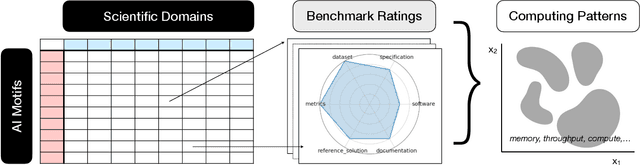
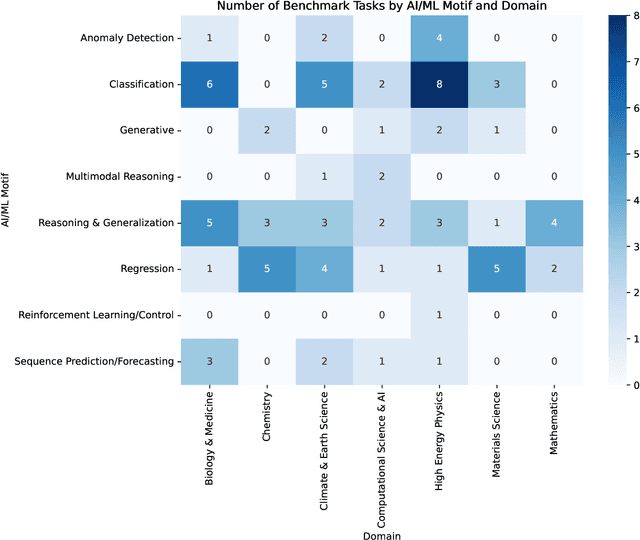
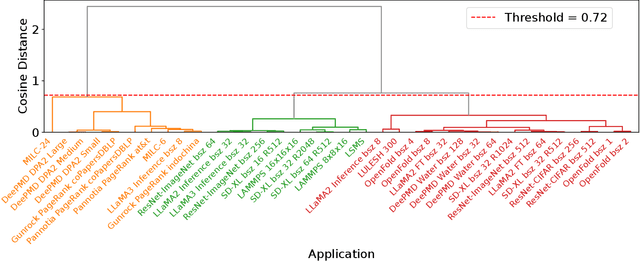
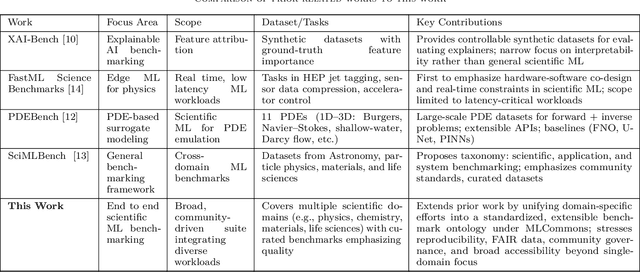
Scientific machine learning research spans diverse domains and data modalities, yet existing benchmark efforts remain siloed and lack standardization. This makes novel and transformative applications of machine learning to critical scientific use-cases more fragmented and less clear in pathways to impact. This paper introduces an ontology for scientific benchmarking developed through a unified, community-driven effort that extends the MLCommons ecosystem to cover physics, chemistry, materials science, biology, climate science, and more. Building on prior initiatives such as XAI-BENCH, FastML Science Benchmarks, PDEBench, and the SciMLBench framework, our effort consolidates a large set of disparate benchmarks and frameworks into a single taxonomy of scientific, application, and system-level benchmarks. New benchmarks can be added through an open submission workflow coordinated by the MLCommons Science Working Group and evaluated against a six-category rating rubric that promotes and identifies high-quality benchmarks, enabling stakeholders to select benchmarks that meet their specific needs. The architecture is extensible, supporting future scientific and AI/ML motifs, and we discuss methods for identifying emerging computing patterns for unique scientific workloads. The MLCommons Science Benchmarks Ontology provides a standardized, scalable foundation for reproducible, cross-domain benchmarking in scientific machine learning. A companion webpage for this work has also been developed as the effort evolves: https://mlcommons-science.github.io/benchmark/
IrrMap: A Large-Scale Comprehensive Dataset for Irrigation Method Mapping
May 13, 2025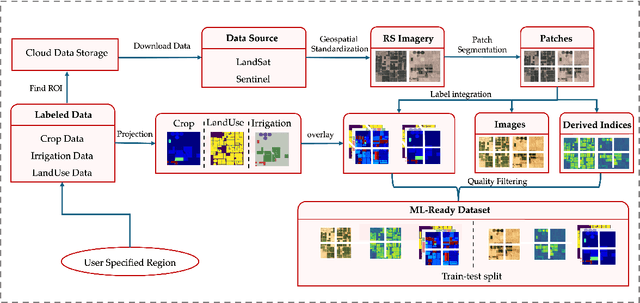
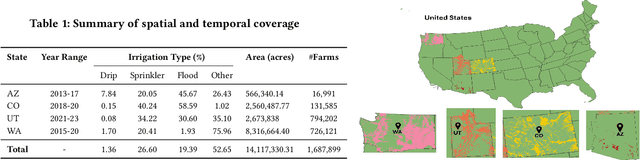
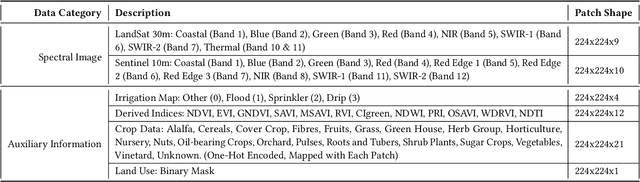

We introduce IrrMap, the first large-scale dataset (1.1 million patches) for irrigation method mapping across regions. IrrMap consists of multi-resolution satellite imagery from LandSat and Sentinel, along with key auxiliary data such as crop type, land use, and vegetation indices. The dataset spans 1,687,899 farms and 14,117,330 acres across multiple western U.S. states from 2013 to 2023, providing a rich and diverse foundation for irrigation analysis and ensuring geospatial alignment and quality control. The dataset is ML-ready, with standardized 224x224 GeoTIFF patches, the multiple input modalities, carefully chosen train-test-split data, and accompanying dataloaders for seamless deep learning model training andbenchmarking in irrigation mapping. The dataset is also accompanied by a complete pipeline for dataset generation, enabling researchers to extend IrrMap to new regions for irrigation data collection or adapt it with minimal effort for other similar applications in agricultural and geospatial analysis. We also analyze the irrigation method distribution across crop groups, spatial irrigation patterns (using Shannon diversity indices), and irrigated area variations for both LandSat and Sentinel, providing insights into regional and resolution-based differences. To promote further exploration, we openly release IrrMap, along with the derived datasets, benchmark models, and pipeline code, through a GitHub repository: https://github.com/Nibir088/IrrMap and Data repository: https://huggingface.co/Nibir/IrrMap, providing comprehensive documentation and implementation details.
Surrogate modeling of Cellular-Potts Agent-Based Models as a segmentation task using the U-Net neural network architecture
May 05, 2025The Cellular-Potts model is a powerful and ubiquitous framework for developing computational models for simulating complex multicellular biological systems. Cellular-Potts models (CPMs) are often computationally expensive due to the explicit modeling of interactions among large numbers of individual model agents and diffusive fields described by partial differential equations (PDEs). In this work, we develop a convolutional neural network (CNN) surrogate model using a U-Net architecture that accounts for periodic boundary conditions. We use this model to accelerate the evaluation of a mechanistic CPM previously used to investigate \textit{in vitro} vasculogenesis. The surrogate model was trained to predict 100 computational steps ahead (Monte-Carlo steps, MCS), accelerating simulation evaluations by a factor of 590 times compared to CPM code execution. Over multiple recursive evaluations, our model effectively captures the emergent behaviors demonstrated by the original Cellular-Potts model of such as vessel sprouting, extension and anastomosis, and contraction of vascular lacunae. This approach demonstrates the potential for deep learning to serve as efficient surrogate models for CPM simulations, enabling faster evaluation of computationally expensive CPM of biological processes at greater spatial and temporal scales.
Building Machine Learning Challenges for Anomaly Detection in Science
Mar 03, 2025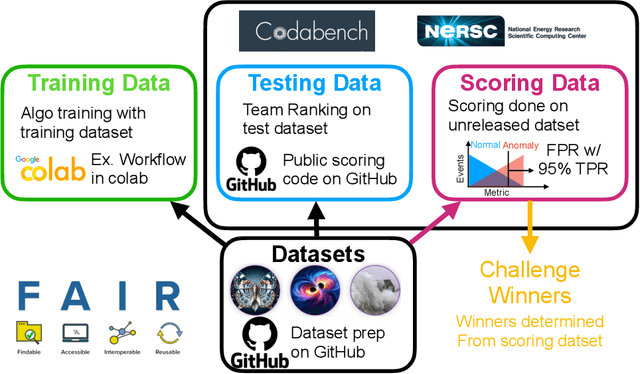
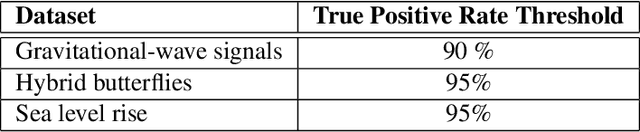
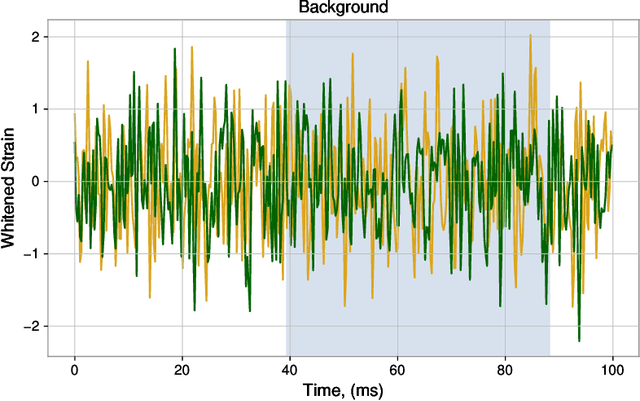
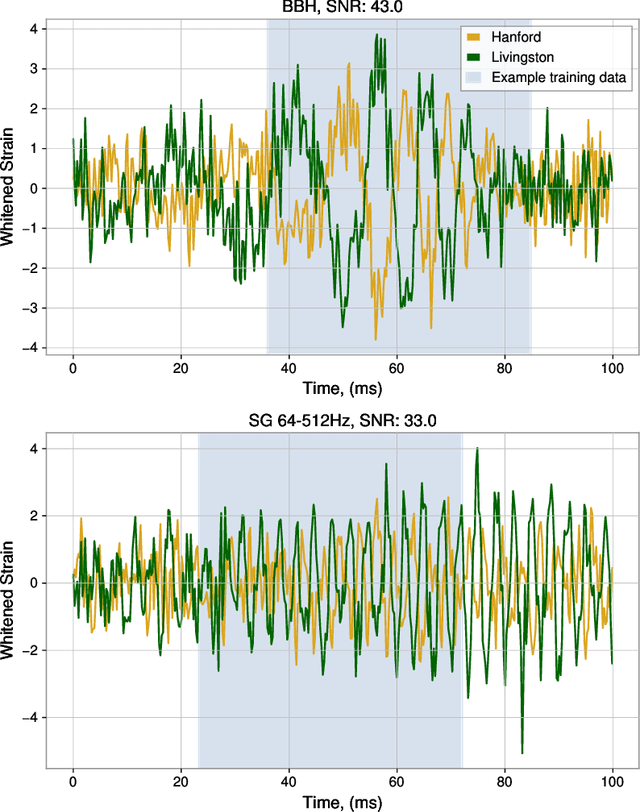
Scientific discoveries are often made by finding a pattern or object that was not predicted by the known rules of science. Oftentimes, these anomalous events or objects that do not conform to the norms are an indication that the rules of science governing the data are incomplete, and something new needs to be present to explain these unexpected outliers. The challenge of finding anomalies can be confounding since it requires codifying a complete knowledge of the known scientific behaviors and then projecting these known behaviors on the data to look for deviations. When utilizing machine learning, this presents a particular challenge since we require that the model not only understands scientific data perfectly but also recognizes when the data is inconsistent and out of the scope of its trained behavior. In this paper, we present three datasets aimed at developing machine learning-based anomaly detection for disparate scientific domains covering astrophysics, genomics, and polar science. We present the different datasets along with a scheme to make machine learning challenges around the three datasets findable, accessible, interoperable, and reusable (FAIR). Furthermore, we present an approach that generalizes to future machine learning challenges, enabling the possibility of large, more compute-intensive challenges that can ultimately lead to scientific discovery.
Scalable Cosmic AI Inference using Cloud Serverless Computing with FMI
Jan 08, 2025
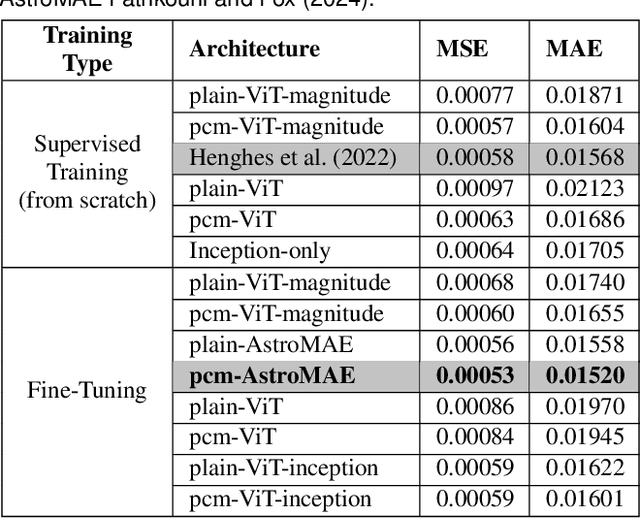

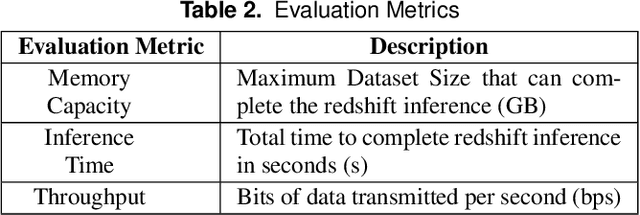
Large-scale astronomical image data processing and prediction is essential for astronomers, providing crucial insights into celestial objects, the universe's history, and its evolution. While modern deep learning models offer high predictive accuracy, they often demand substantial computational resources, making them resource-intensive and limiting accessibility. We introduce the Cloud-based Astronomy Inference (CAI) framework to address these challenges. This scalable solution integrates pre-trained foundation models with serverless cloud infrastructure through a Function-as-a-Service (FaaS) Message Interface (FMI). CAI enables efficient and scalable inference on astronomical images without extensive hardware. Using a foundation model for redshift prediction as a case study, our extensive experiments cover user devices, HPC (High-Performance Computing) servers, and Cloud. CAI's significant scalability improvement on large data sizes provides an accessible and effective tool for the astronomy community. The code is accessible at https://github.com/UVA-MLSys/AI-for-Astronomy.